If you want to go from basic prototypes to systems that work at scale, you need more than better prompts. You also need a new way to organize your team and strong professional infrastructure.
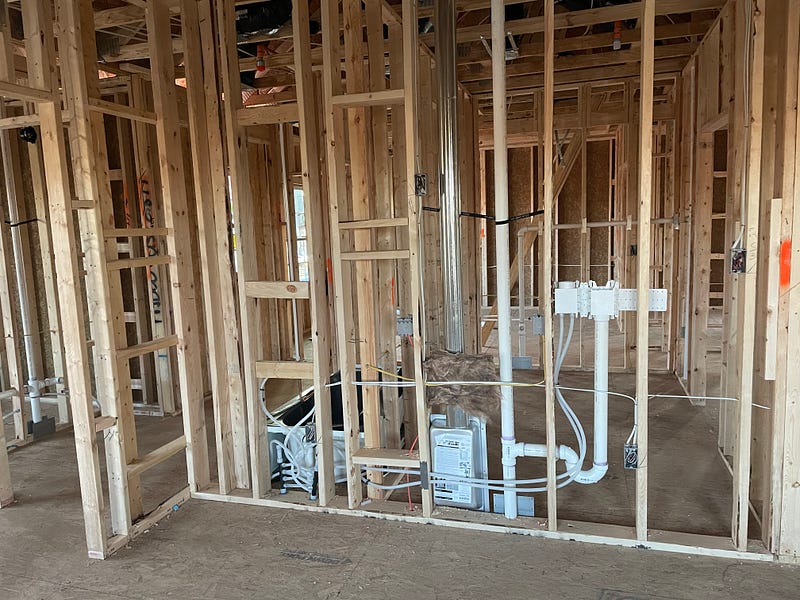
Option A: The Handyman Special.
You hire one person, let’s call him Dave. Dave is easy to work with and says, “Don’t worry, I do it all.” He pours the foundation on Monday, frames the walls on Tuesday, tries to wire the electrical panel on Wednesday, and installs the plumbing on Thursday.
The result is about what you’d expect. The framing is fine, but the roof leaks, the lights flicker when you use the microwave, and Dave eventually gets overwhelmed.
For the past two years, most companies have built generative AI like this. They used a single Large Language Model, our “Handyman,” and gave it huge prompts, expecting it to be a poet, a Python coder, a SQL analyst, and a compliance officer all at once.
We asked a generalist to do specialist work. This caused mistakes, made systems unreliable, and kept them from scaling.
Option B: The General Contractor.
You hire a General Contractor, or GC. The GC doesn’t do the hands-on work. Their main skill is managing the whole process.
If you ask for a kitchen, the GC breaks the job into parts. They bring in a plumber for the sink, an electrician for the oven, and a carpenter for the cabinets. They make sure each specialist sticks to their job, so the painter never touches the breaker panel.
By 2026, the era of the single, all-in-one agent will be over. We’re moving to Multi-Agent Systems (MAS) managed by a General Contractor.
But a General Contractor can’t build a house with just knowledge. They need a real job site, permits, blueprints, and utilities. If you’re building with AWS, the “GC” is the Supervisor Agent, and the job site is Amazon Bedrock AgentCore.
Here’s how you can move from “handyman code” to a professional setup.
The Org Chart: The Supervisor Agent
With Amazon Bedrock, you no longer have to rely on one big model for every user request. Now, you can set up a Supervisor Agent.
The Supervisor, also known as the Orchestrator, is an agent that figures out what needs to be done and assigns tasks. It doesn’t have its own tools. Instead, it manages a team of specialized “Collaborator Agents.”
For example, if a user tells a banking app, “I want to reverse a fee because my app crashed,” the Supervisor sees two separate tasks. It sends the “app crash” issue to a Technical Support Agent and the “fee reversal” to a Financial Services Agent.
This approach solves the “Handyman” problem. The Financial Agent has a clear job and context. It doesn’t debug code; it just processes transactions. By narrowing the scope, you get more accurate results and fewer mistakes.
But an org chart by itself isn’t enough. You need real infrastructure to make everything work.
The Job Site: Bedrock AgentCore
Putting AI into production means you have to solve tough operational problems like security, state management, API connections, and scaling costs.
If you tried to build a multi-agent system on your own in 2024, you probably had to manage Docker containers for runtimes, Redis clusters for memory, and hard-coded API keys. This setup was fragile and hard to maintain.
Bedrock AgentCore is a managed infrastructure layer, like an “Operating System” for agents, that handles these challenges. It offers four key pillars needed for Operational Excellence (OE).
1. The Runtime (The Utilities)
A General Contractor needs power and water on site to use tools, but you don’t want electricity running at full power when no one is working.
Here’s how it works: AgentCore gives you a Serverless Runtime. This managed environment runs your agent’s logic. It supports “scale to zero,” so when the Supervisor sends a task to a worker agent, the runtime starts up right away and shuts down as soon as it’s done. You don’t pay for idle virtual machines.
2. Identity (The Security Badges)
Safety is critical on a professional job site. You wouldn’t let the landscaper into the secure electrical room. That’s why you need badges and permits.
In enterprise AI, this is essential. You can’t give an AI agent unlimited permissions. AgentCore manages Identity using AWS IAM integration.
This setup allows for detailed identity control. When a user with certain permissions interacts with the Supervisor, that identity is securely passed to the worker agents. The “Database Agent” only runs queries the user is allowed to see. This enforces “Least Privilege” access and prevents the “confused deputy” problem, where an AI might access data it shouldn’t.
3. The Gateway (The Supply Chain)
A General Contractor needs a reliable way to get materials. They shouldn’t have to make their own nails.
In practice, the AgentCore Gateway is the central registry for your agents. It gives agents a standard way to find and connect to tools like APIs, Lambda functions, or knowledge bases.
Since it supports standards like the Model Context Protocol (MCP), your Supervisor agent can find out which tools are available to solve a problem without you having to hard-code API endpoints.
4. Memory (The Site Log)
Imagine a construction site where a new crew arrives each morning with no idea what was built the day before. They’d have to ask the client, “Do you want walls again?”
In reality, AI agents need memory. AgentCore provides managed memory and automatically separates:
- Conversation Memory: Short-term context (e.g., “The user just asked for a refund”).
- Semantic Memory: Long-term persistence (e.g., “The user prefers Python over Java”).
When the Supervisor gives a task to a worker, it also passes along the context. This way, the worker agent knows what’s already happened, so the user doesn’t have to repeat anything.
Conclusion: The Move to Operational Excellence
Building a quick prototype with a Python script can be fun. But running a service for 100,000 users with financial-grade security is real engineering work.
Switching to the Supervisor plus AgentCore model is a step toward Operational Excellence.
When you separate orchestration, handled by the Supervisor, from execution, handled by the Workers, and use managed infrastructure like AgentCore for the basics, you get the key features of a production-ready system:
- Scalability: The serverless runtime can handle sudden spikes, from zero to huge numbers of users, without you needing to manage servers.
- Maintainability: You can upgrade a “Specialist” agent, such as swapping its LLM for a newer one, without affecting the Supervisor’s logic.
- Security: IAM-native identity means compliance and governance are built in from the start, not added later.
The time of the “Handyman” AI has ended. If you want to build at scale, it’s time to bring in a General Contractor and give them the right tools and environment.
By Joshua McDonald on January 22, 2026.
Reader discussion